
An Eye-Opening Guide to Dry Eye Disease

Dry Eye Disease (DED) is one of the most common ocular conditions, affecting millions of people worldwide. Although many people think of dry eye as a minor inconvenience that causes occasional irritation, it is actually a complex, chronic disease that affects the delicate balance of the eye's surface. Left untreated, Dry Eye Disease can lead to persistent discomfort, fluctuating vision, inflammation, and even damage to the ocular surface. Understanding how the eye maintains its moisture and why this process becomes disrupted is essential to understanding both the disease and its treatment.

The surface of the eye is protected by a thin, highly specialized coating known as the tear film.
Contrary to popular belief, tears are much more than water. The tear film is a complex structure composed of three essential components that work together to keep the eyes healthy, comfortable, and functioning properly. The outer lipid, or oil, layer is produced by the meibomian glands located within the eyelids. This oily layer slows tear evaporation and helps stabilize the tear film. Beneath it lies the aqueous layer, produced by the lacrimal glands, which provides moisture, oxygen, nutrients, and protective proteins to the surface of the eye. The innermost mucin layer, produced by specialized goblet cells within the conjunctiva, allows the tears to spread evenly across the cornea and adhere to the eye's surface. Together, these three layers create a smooth optical surface for clear vision while protecting the eye from environmental irritants, infection, and dehydration.
Patients with Dry Eye Disease commonly experience symptoms such as burning, stinging, grittiness, fluctuating or blurred vision, excessive tearing, light sensitivity, eye fatigue, and discomfort during activities such as reading or prolonged computer use. Interestingly, excessive tearing can actually be a sign of dry eye, as irritation of the ocular surface often triggers the production of reflex tears that lack the proper composition needed to maintain a healthy tear film.

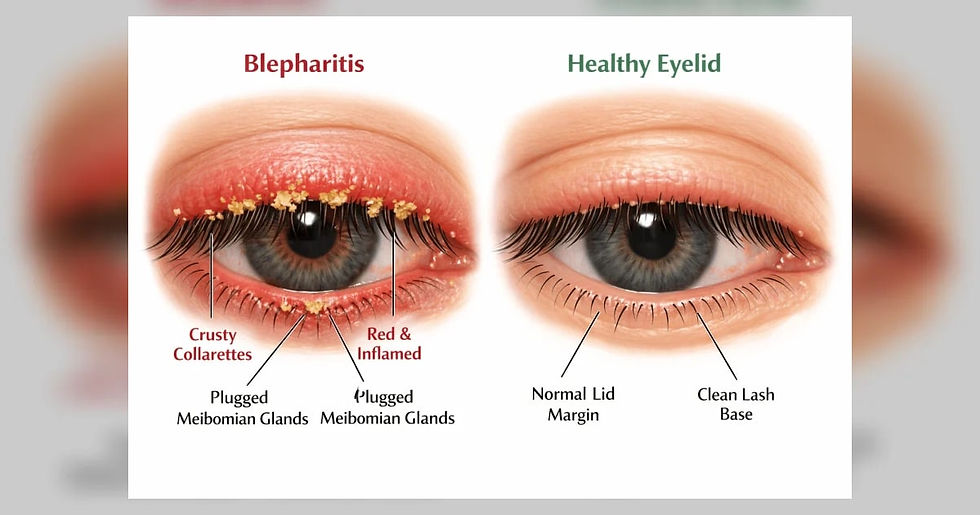
One of the most important concepts in understanding Dry Eye Disease is the variability in its etiology, or underlying causes. Rather than representing a single condition, Dry Eye Disease encompasses a broad spectrum of disorders that often overlap. Some patients develop aqueous-deficient dry eye, in which the lacrimal glands fail to produce an adequate volume of tears. This may occur due to aging, autoimmune diseases such as Sjögren syndrome, certain medications, or prior ocular surgery. Others experience evaporative dry eye, which occurs when tears evaporate too rapidly because of dysfunction of the meibomian glands. Meibomian gland dysfunction is among the most common causes of Dry Eye Disease and significantly affects the stability of the tear film. As the tear film becomes unstable, the surface of the eye experiences increased friction, inflammation, and cellular damage. This creates a vicious cycle in which inflammation further disrupts tear production and quality, leading to worsening symptoms over time.

Additional contributing factors may include: eyelid abnormalities such as an ectropion (when the
lower lid droops away from the eye), incomplete blinking, contact lens wear, hormonal changes, allergies, environmental conditions, and prolonged use of digital devices, which reduces
blink frequency and allows the tear film to evaporate more quickly. Because these factors often coexist, two patients with nearly identical symptoms may have very different underlying causes. This variability is why a comprehensive dry eye evaluation is so important. Modern diagnostic testing enables eye care professionals to evaluate tear stability, meibomian gland function, ocular surface health, inflammation, and other factors to develop a personalized treatment plan.
Contemporary management of Dry Eye Disease has evolved considerably over the past decade. Rather than focusing solely on symptom relief, current treatment strategies aim to identify and address the underlying mechanisms that drive the disease. Depending on the individual's specific diagnosis, treatment may include prescription anti-inflammatory medications that reduce inflammation on the ocular surface, thermal therapies and gland expression to improve meibomian gland function, eyelid hygiene programs, Intense Pulsed Light (IPL) therapy for selected patients with evaporative dry eye, punctal occlusion to help retain natural tears on the eye, or specialized scleral contact lenses that provide continuous hydration and protection for patients with more advanced disease. Lifestyle modifications, including improving blinking habits, optimizing workplace ergonomics, reducing environmental stressors, and supporting ocular health through nutrition, may also play an important role in long-term disease management.
Early diagnosis and appropriate management can help preserve vision, improve comfort, and enhance quality of life for patients living with this common but often underrecognized condition.


Comments