
The Clear Choice: Best Contact Lenses for Dry Eyes
For millions of people, contact lenses provide the freedom to see sharply without glasses. But what happens when those same lenses leave your eyes feeling dry, irritated, tired, or uncomfortable by the end of the day? If you have experienced dry eyes while wearing contact lenses, you are certainly not alone. In fact, contact lens-related dryness is one of the most common reasons people struggle with lens comfort or eventually stop wearing contacts altogether. The good news is that you may not have to choose between comfortable eyes and the convenience of contact lenses. Advances in contact lens technology have created more options for people with dry eyes, including newer materials, improved hydrating lenses, daily disposable lenses, and sometimes specialty options such as scleral lenses.
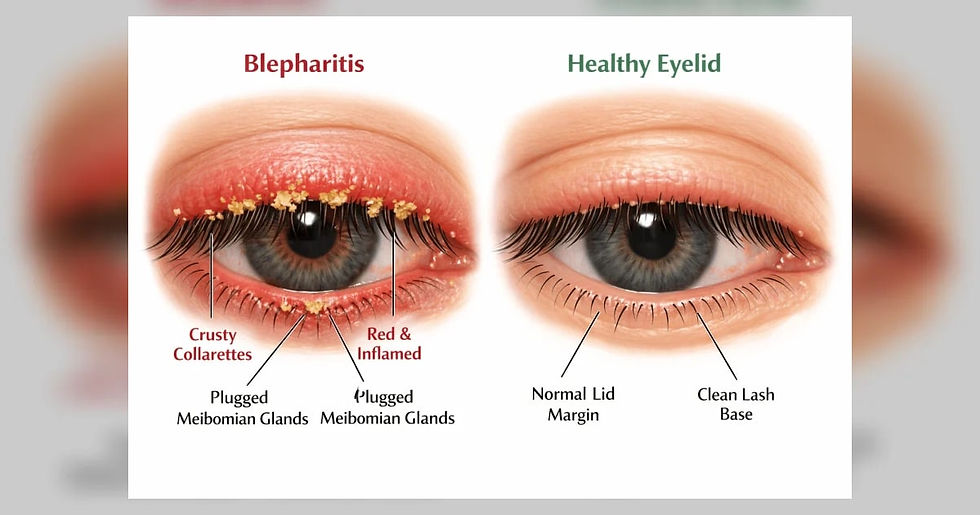
Finding the right lens is only part of the solution. Sometimes the underlying dry eye needs to be addressed before contact lenses can be worn comfortably. An eye-care professional can evaluate the eye's surface and determine whether factors such as tear-film instability, inflammation, eyelid problems, or other ocular-surface issues may be contributing to pain. Treating these primary problems may improve contact lens tolerance. Understanding the relationship between contact lenses and dry eyes starts with the tear film.
Your eyes are naturally protected by a thin layer of tears that keeps the eye's surface smooth, moist, and comfortable. When a contact lens sits on the eye, it interacts with the tear film and affects how moisture is distributed across the eye's surface. As the day progresses, some contact lens wearers may notice burning, redness, a gritty sensation, fluctuating vision, or the feeling that their lenses are becoming increasingly uncomfortable. For someone with chronic dry eye, these symptoms can be even more noticeable.
Fortunately, contact lens technology has changed significantly over the years, with newer lenses incorporating advanced materials and surface technologies designed to improve moisture retention, oxygen transmission, wettability, and overall comfort. Silicone hydrogel lenses, for example, allow high oxygen permeability while generally having lower water content, which can help reduce the lens's need to draw water from the tear film. Other lenses use water-gradient technology, which features a core with greater breathability and a lower water content that gradually increases to nearly 100% at the outer surface, designed to interact more naturally with the eye's tears. Moreover, other lenses incorporate tear-integrating technologies, using ingredients such as polyvinylpyrrolidone (PVP) or phosphorylcholine to create a more hydrophilic surface and support tear-film stability. While these innovations can make contact lens wear more comfortable for people with dry eyes, no single lens is ideal for everyone. The right choice is contingent on factors such as the type and severity of dry eye, tear quality, eyelid and ocular-surface health, the shape and fit of the eye, and how many hours the lenses are worn each day.

Another great option for people searching for the best contact lenses for dry eyes is a daily disposable lens. Daily contact lenses are worn for a single day and then discarded, eliminating the need to clean and store them overnight. Because a new lens is used each day, daily disposables can reduce lens deposits. Protein, lipid, and calcium deposits accumulate on contact lenses over time, decreasing surface wettability, increasing friction against the eyelid, and destabilizing the natural tear film. This accelerates tear evaporation and worsens dry eye symptoms like irritation, grittiness, and blurred vision. Therefore, disposing of the contact lenses daily will allow for a fresher, more comfortable wearing experience. Also, wearing disposable lenses greatly reduces the risk of infection because you touch your eyes less often, making them a great choice for everyone.
For patients with more severe dry eye or who cannot tolerate traditional soft contact lenses, scleral lenses may be an alternative. Scleral lenses are larger specialty contact lenses that vault over the cornea and rest on the sclera, or white part of the eye. Unlike a traditional soft contact lens, a scleral lens creates a space between the lens and the cornea that is filled with sterile fluid. This fluid reservoir can help keep the corneal surface hydrated throughout the day. Scleral lenses are not necessary for everyone with dry eyes. Still, for certain patients with severe dry eye or other ocular-surface conditions, they can be an important treatment and vision-correction option.

While today's contact lenses offer more choices than ever, there is another important piece of the
puzzle that is sometimes overlooked: giving your eyes a break from contact lenses. Even if your lenses feel comfortable, your eyes can benefit from time without them. Wearing glasses for part of the day—or even taking an occasional full day away from contacts—can give the ocular surface a chance to recover. It is also important to follow the recommended wearing schedule for your specific lenses and to avoid sleeping in contacts unless specifically directed by your eye-care professional.
If your eyes become increasingly dry or uncomfortable while wearing contacts, don't assume that you have to live with it. Discomfort can be a sign that your current lenses, wearing schedule, or underlying eye condition needs reassessment. Persistent redness, pain, light sensitivity, discharge, or vision changes should always be evaluated promptly by an eye-care professional.
Ultimately, having dry eyes does not automatically mean you have to give up contact lenses. Whether the answer is a newer hydrating lens, daily disposable contacts, a different wearing schedule, treatment for chronic dry eye, or even specialty scleral lenses, there are more options available today than ever before. The goal is not simply to find a lens that lets you see clearly—it is to find an approach that lets you see clearly while keeping your eyes comfortable and healthy.


Comments